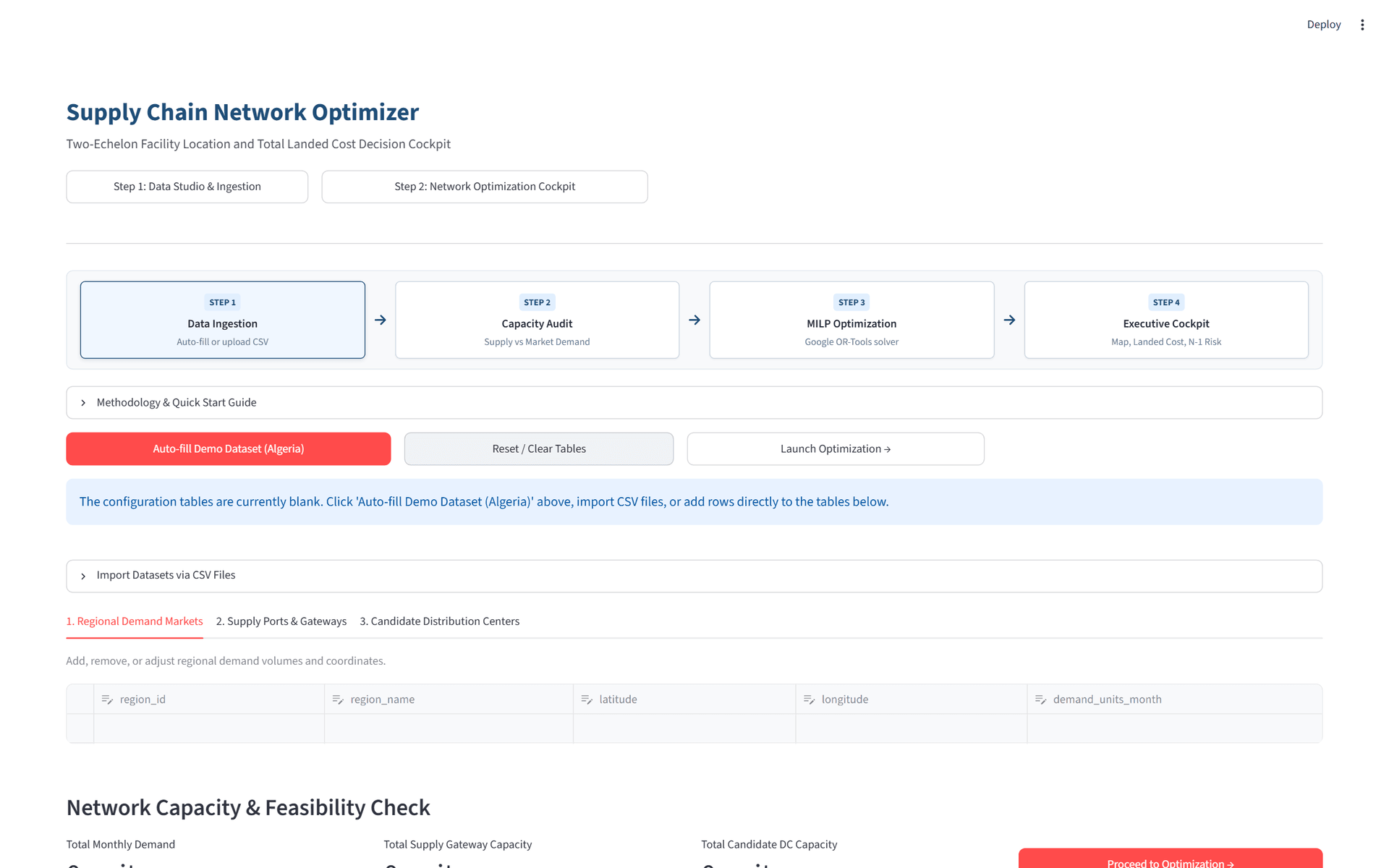
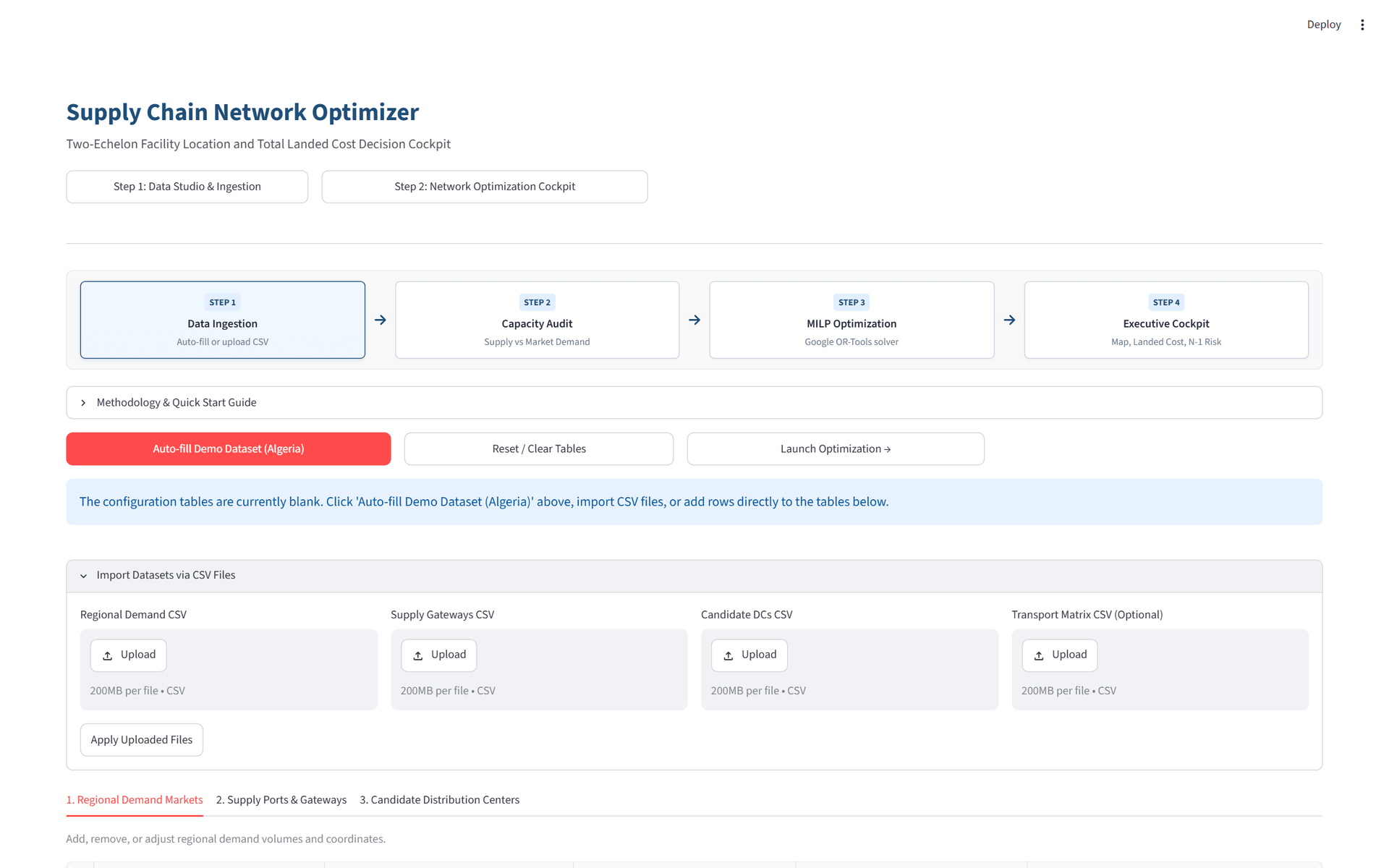
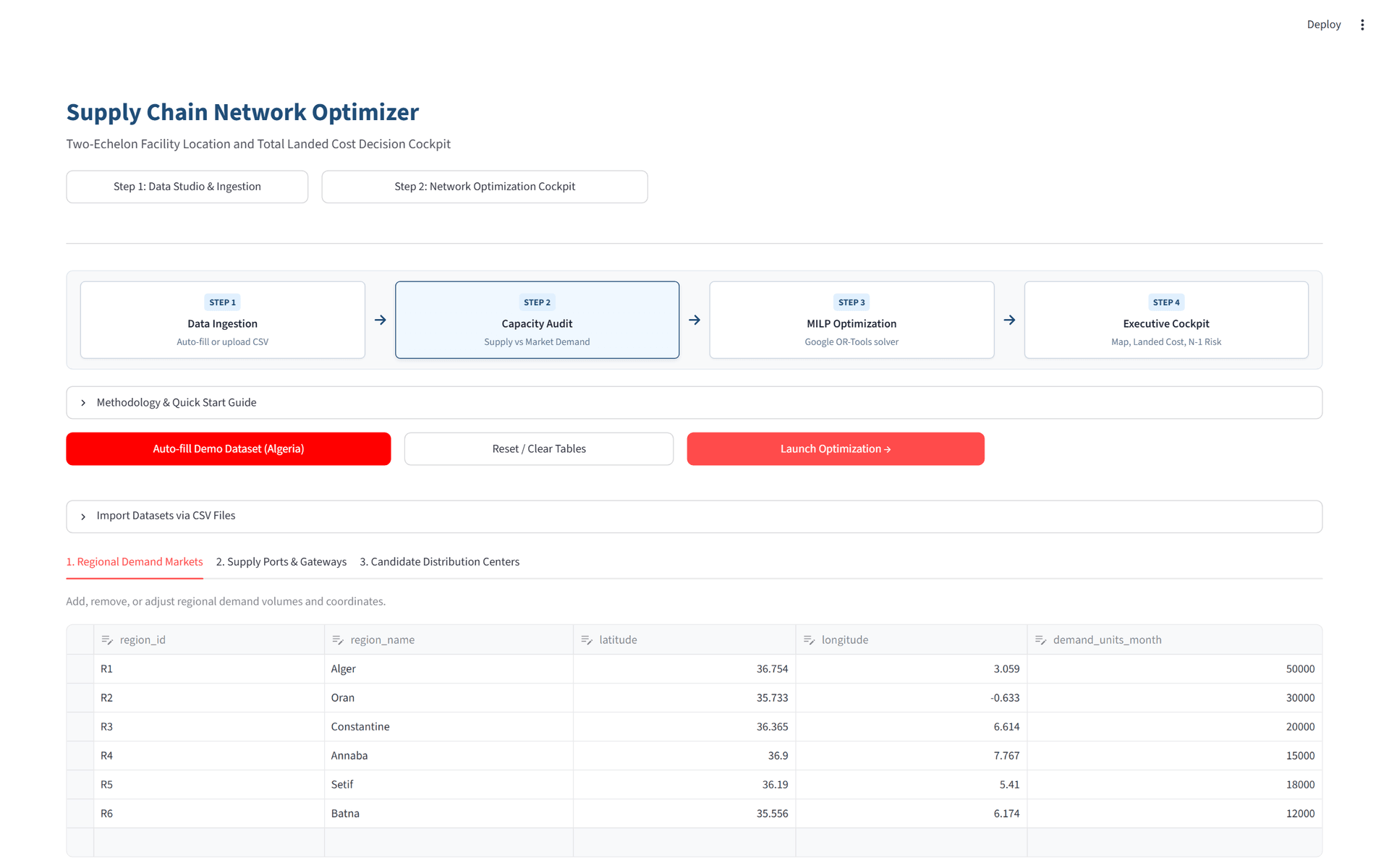
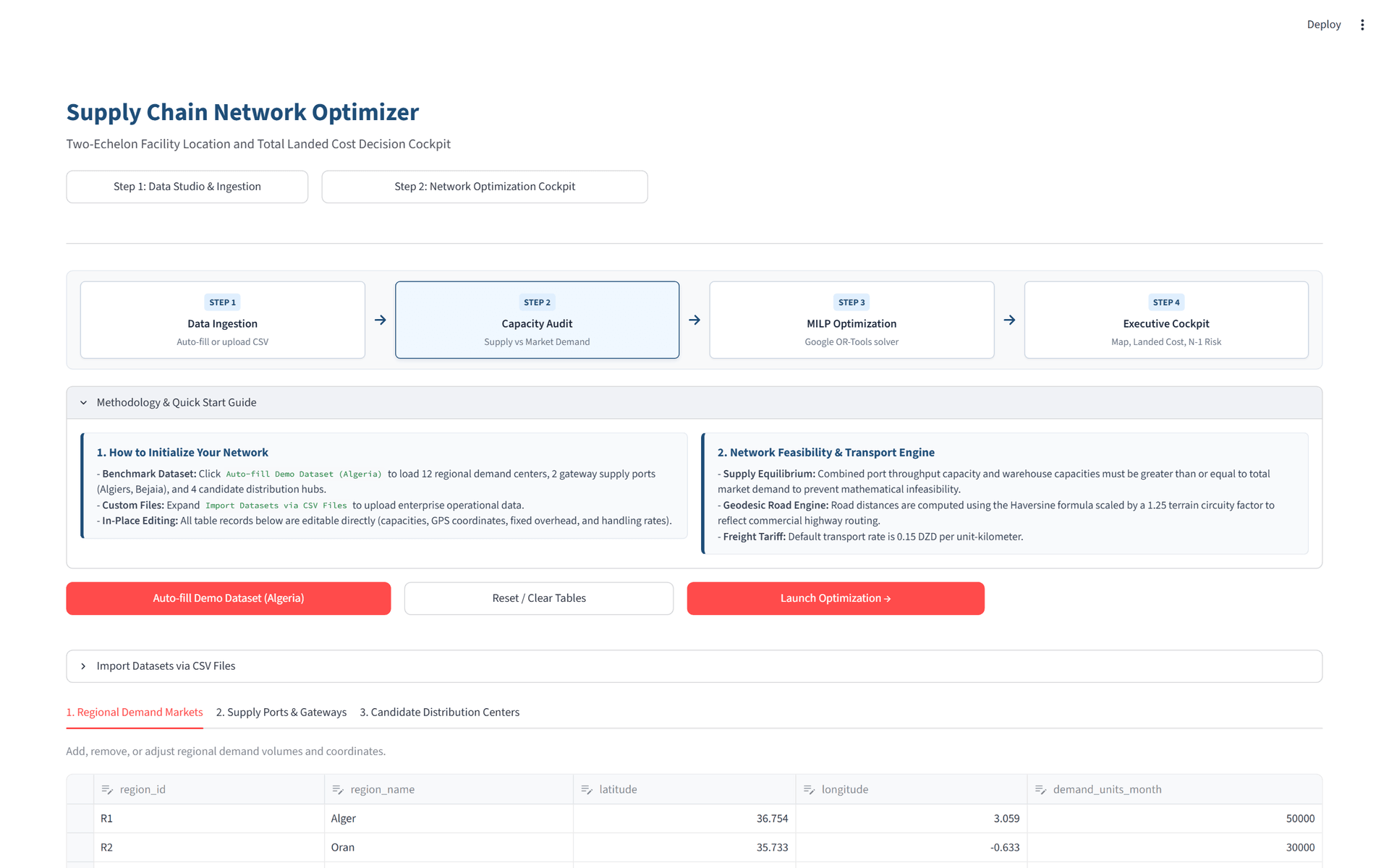
RouteZone: Two-Echelon Facility Location Optimization
Open-source MILP solver for warehouse network design and cost minimization
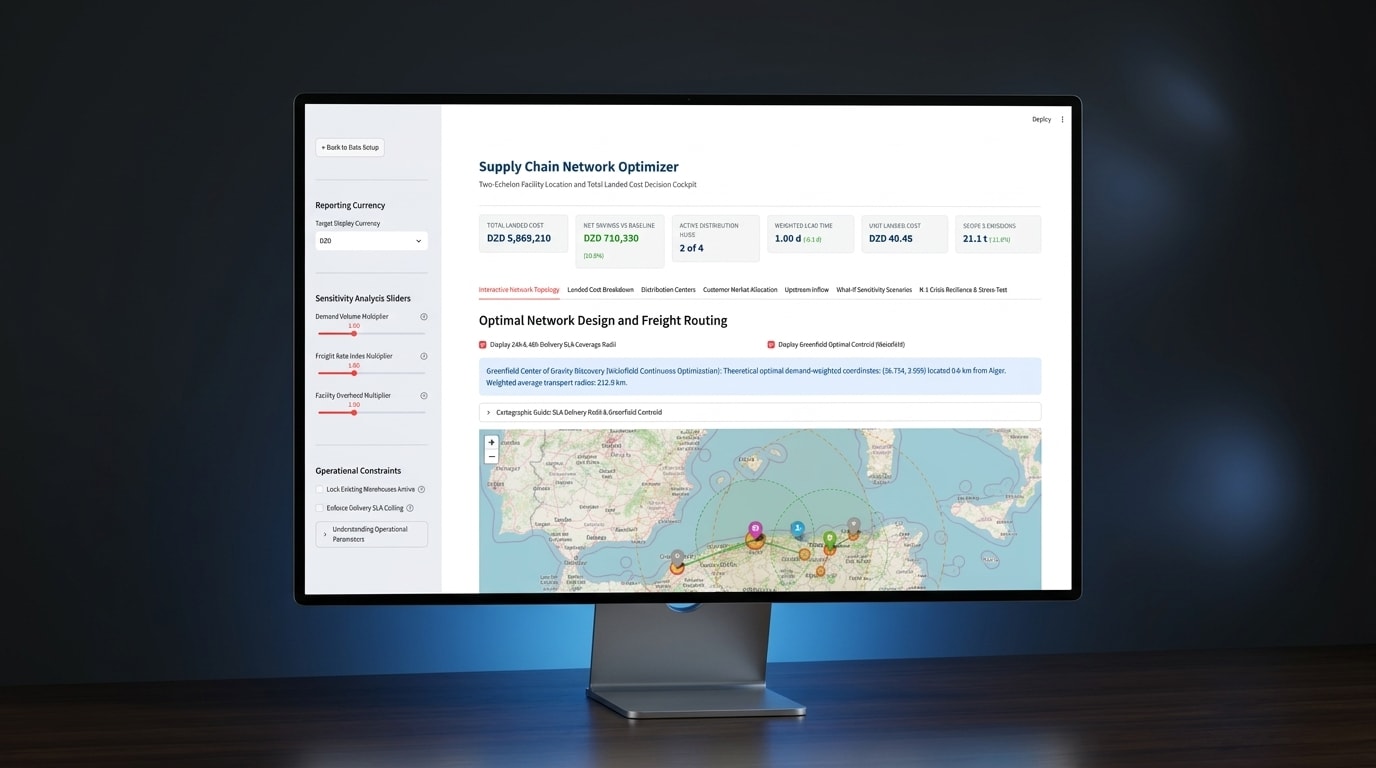
After building RouteOptim for vehicle routing, I wanted to address the level above: where do you actually build your warehouse network? Most supply chain teams use Excel models or commercial black boxes that don't show their work. I built an open-source platform that makes facility location transparent, testable, and reproducible.
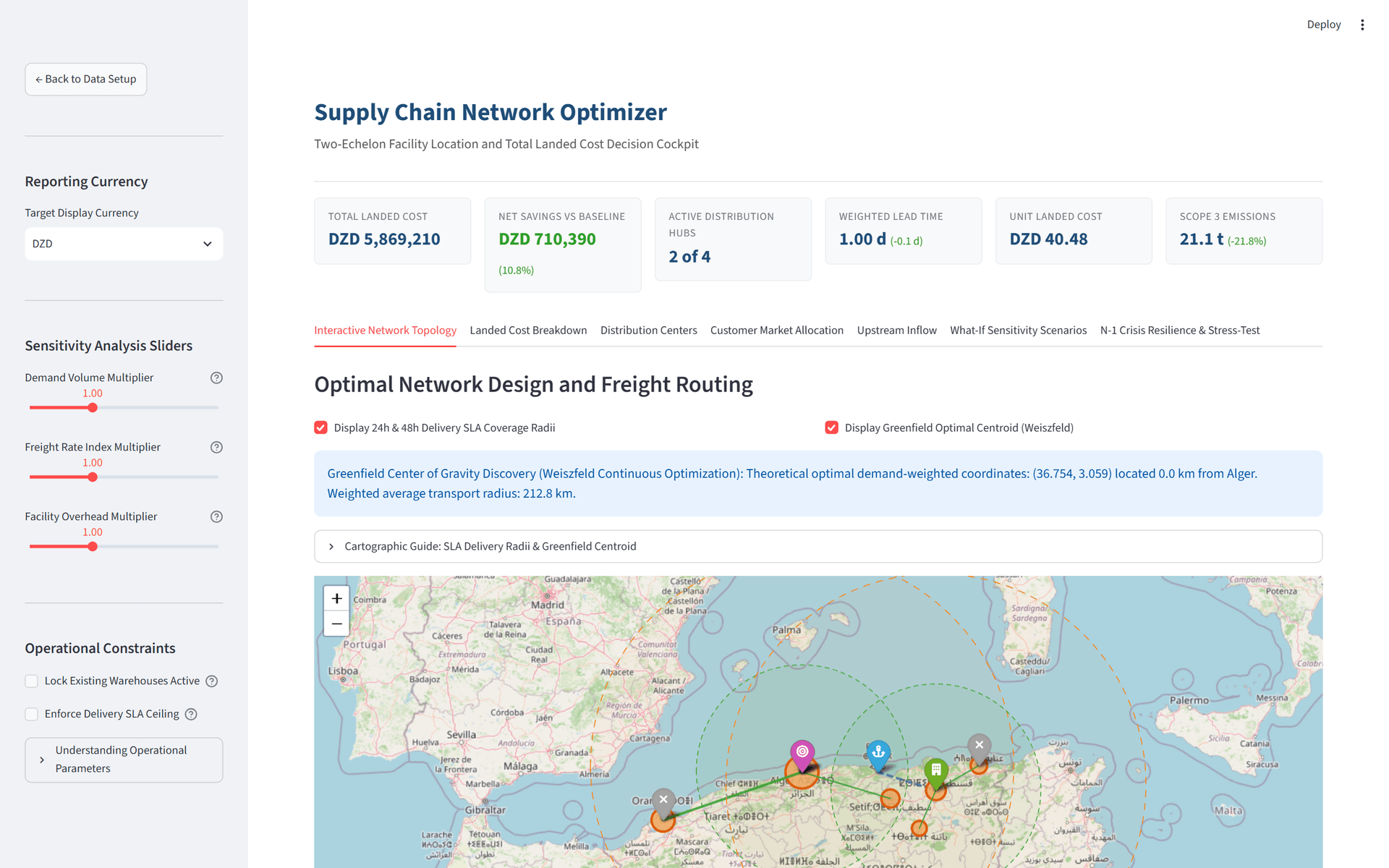
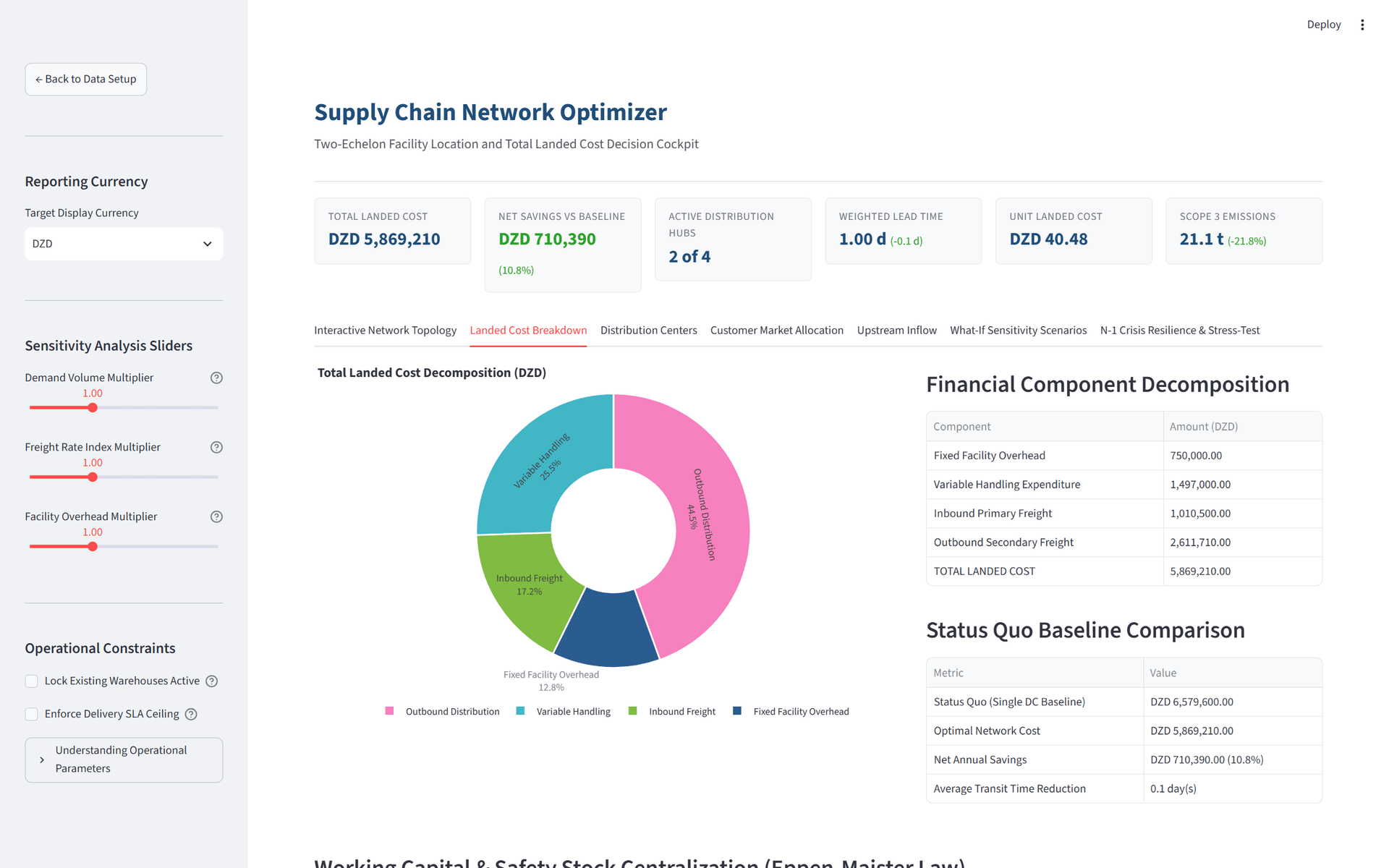
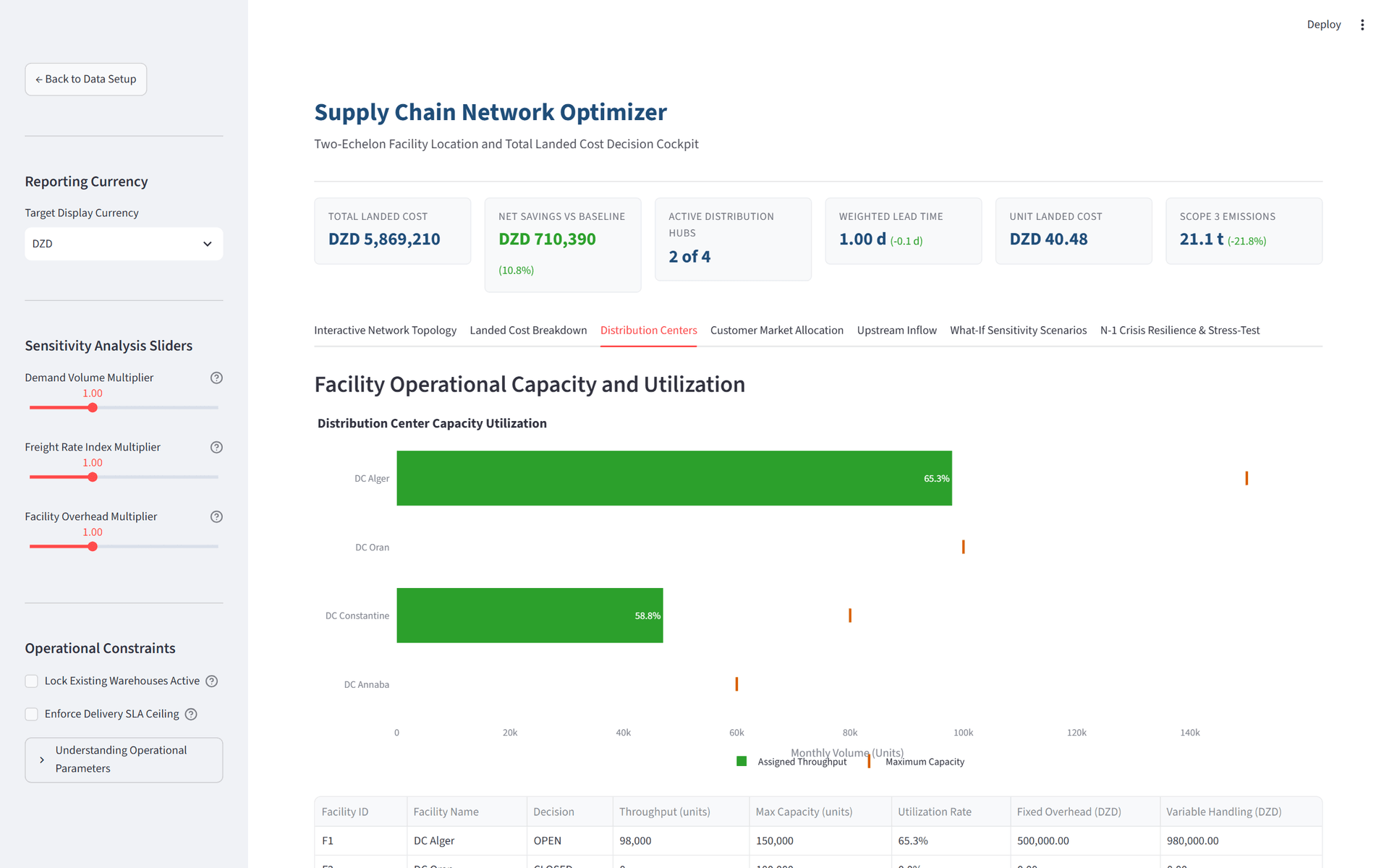
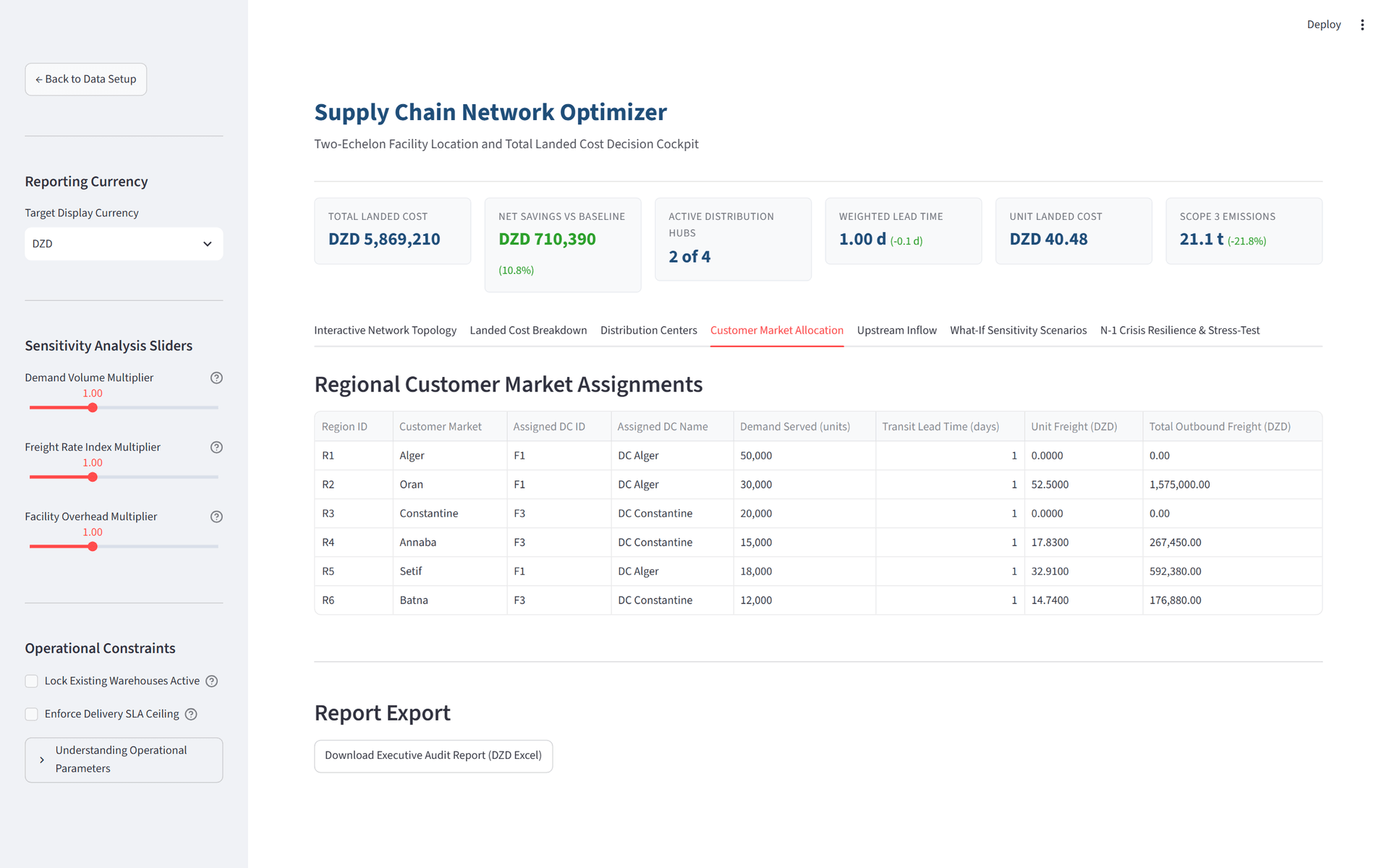
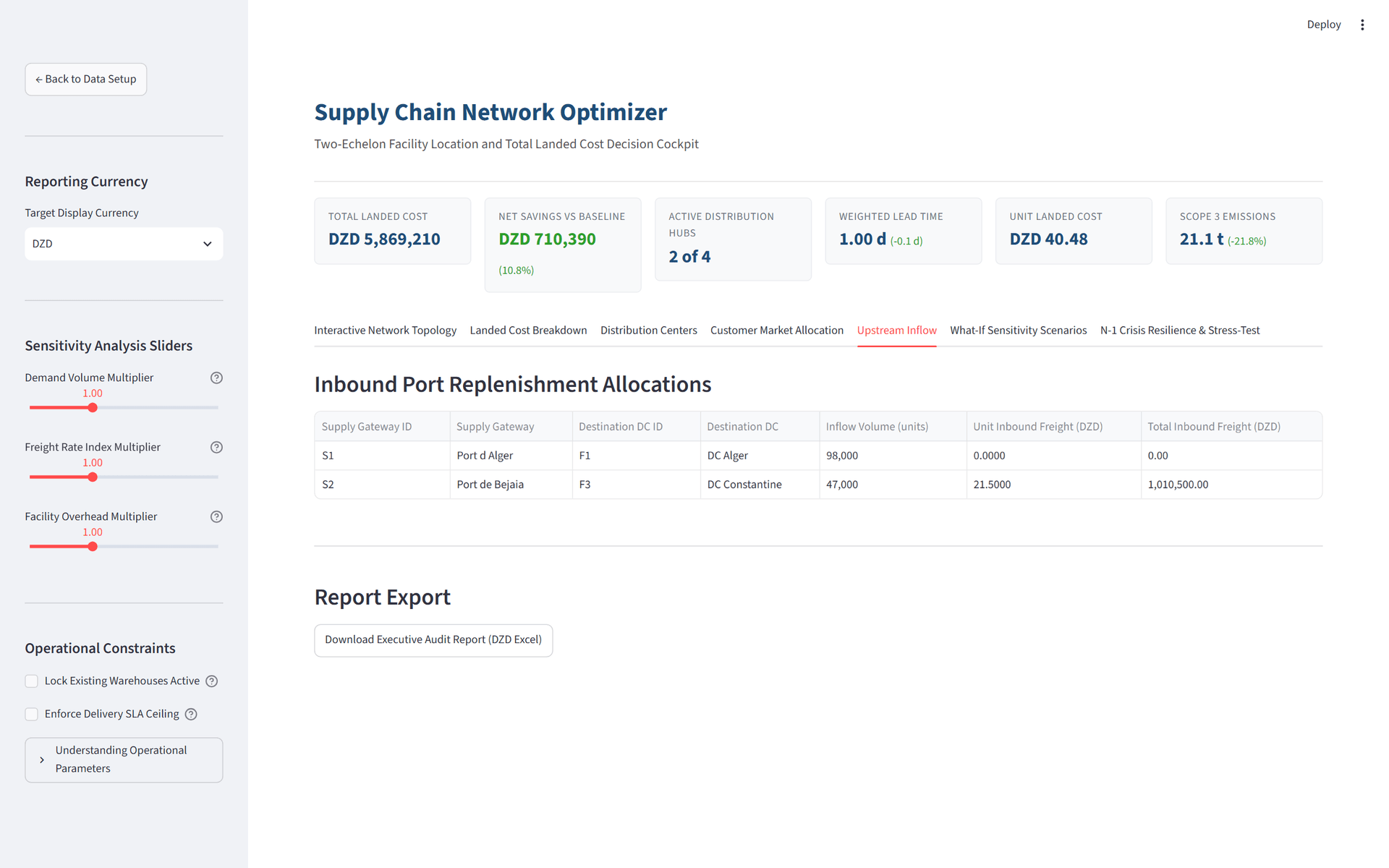
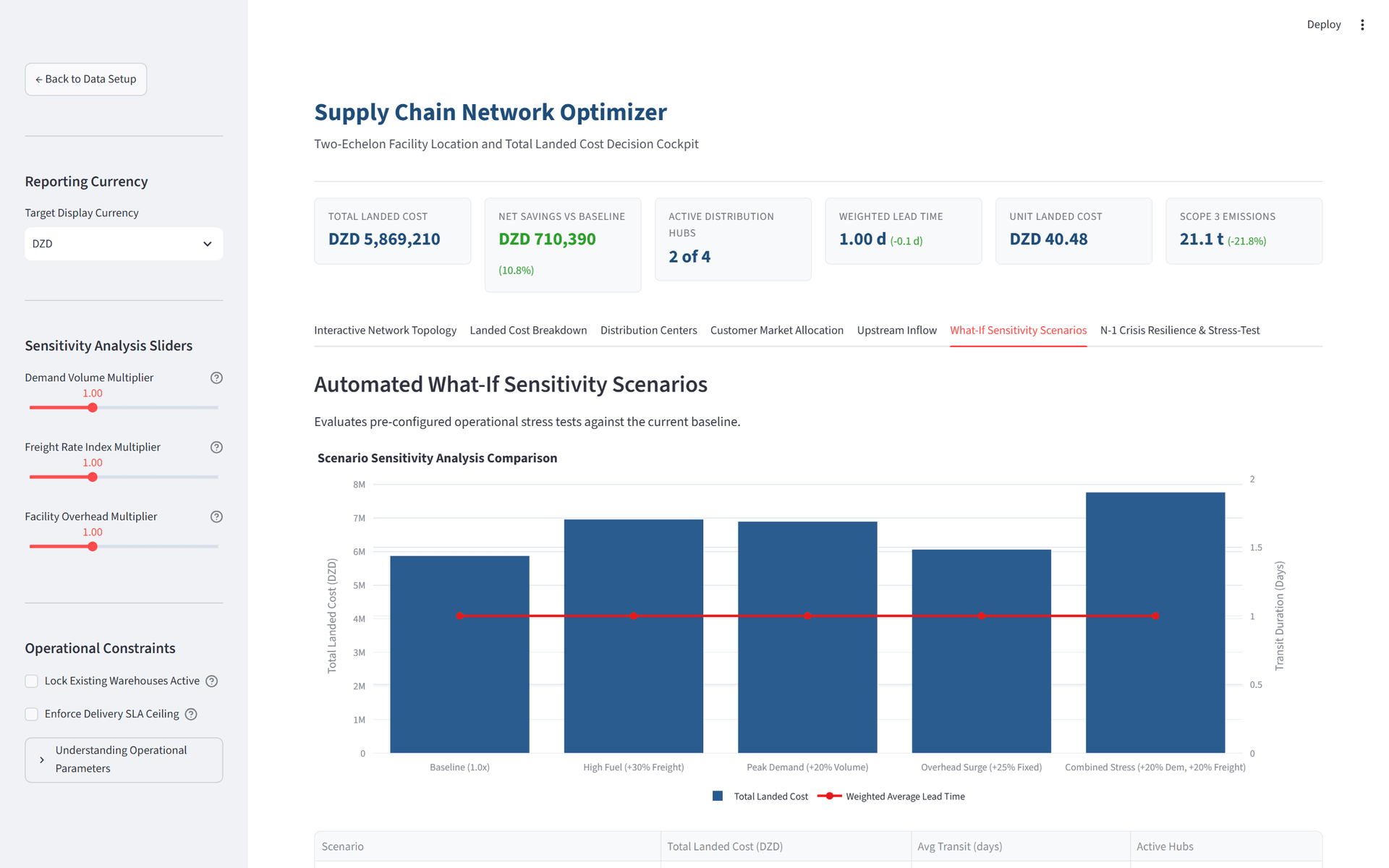
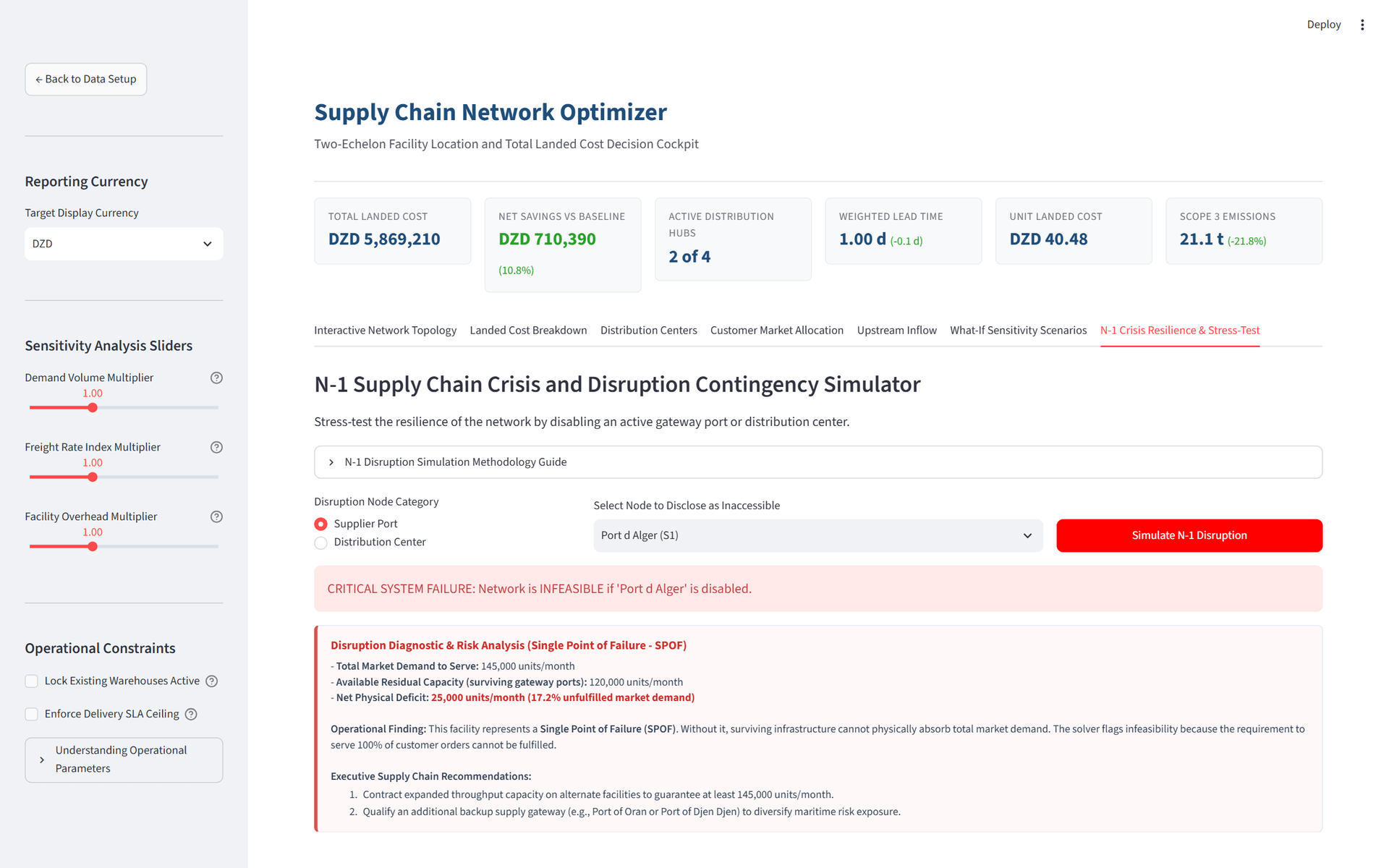
Two-echelon facility location is hard because you need to decide: which candidate warehouses to activate (fixed cost vs benefit), how to route freight upstream from ports to warehouses, and how to assign customers downstream, all while minimizing total landed cost. Traditional approaches either ignore constraints or hide their math. You also can't easily stress-test what happens if a warehouse fails (N-1 resilience).
Built a MILP solver using Google OR-Tools. Python backend with Pydantic v2 for validation, Pandas/NumPy for data prep. Streamlit frontend with Plotly dashboards for visualization. Automated multi-tab Excel export for audits and board presentations. 25 unit tests to prevent drift. Deployed on Streamlit Community Cloud.
Live solver. Users can run a facility location optimization in <30 seconds. N-1 resilience engine shows cost impact of losing any warehouse (critical for risk planning). Automated Excel reporting eliminates manual summarization. Open-source means no vendor lock-in; teams can fork, modify, and deploy to their own infrastructure.
Github Repo : https://github.com/sambovix/routezone
After building RouteOptim for vehicle routing, I wanted to address the level above: where do you actually build your warehouse network? Most supply chain teams use Excel models or commercial black boxes that don't show their work. I built an open-source platform that makes facility location transparent, testable, and reproducible.